
penalties – too many players
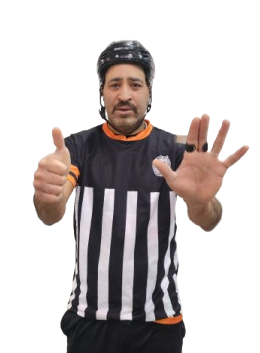
Rule 19. Change of Players
(a) When play is in progress, not more than six players (including a goaltender) are permitted on the floor at any one time.
(b) Players may be changed at any time from the players’ bench, provided that the player or players leaving the floor shall be at the
players’ bench [within 3.05m (10 ft.)] and out of play before any change is made.
(c) A player on the penalty bench who is to be changed after their penalty has been served must proceed by way of the floor and be
at the players’ bench before any change can be made.
(d) A team shall be required to place the correct number of players on the floor when requested by the Referee. The Visiting Team
must be the first to place any playing line-up on the floor to commence play at all times. Each team is allowed only one change of
player(s) during a stoppage of play.
(e) A Bench Minor penalty shall be assessed for a violation of any section of this rule. The penalty shall be served by a player committing the infraction, as covered under Rule 29 – Bench Minor penalties.
(f) If, in the last two minutes of regular playing time, or any time in overtime, a Bench Minor penalty is imposed for DELIBERATE illegal substitution, a Penalty Shot shall be awarded against the offending team. The Bench Minor shall not be served. See Rule 55 (e) Note – Delay of Game
Note 1: If in the course of making a substitution, either the player entering the game or the player leaving the game intentionally plays the ball with their stick, feet or hands or intentionally checks or makes any physical contact with an opposing player while the player respectively leaving or entering the game is actually on the floor, then the infraction of “too many players on the floor” shall be called.
Note 2: If in the course of substituting, either the player entering the play or the player retiring is struck by the ball accidentally, the play should not be stopped and no penalty shall be called.
Note 3: When a goaltender leaves their goal area and proceeds to the players’ bench for the purpose of substituting another player, they must be within 3.05 m (10 ft) of the bench before the substitute may enter the game. If the substitute is made prematurely, the official shall stop the play when the offending team gains possession and control of the ball. The resulting face-off shall take place at the centre face-off spot unless this gives a territorial advantage to the offending team. In which case the face-off will take place at the closet face-off spot to where the stoppage occurred. There shall be no time penalty for making the premature substitution.
(g) For player changes during stoppages in play, the Referee shall begin the line change procedure as soon as it is safe to do so for the ensuing face-off and then allow a 5 second period during which the Visiting Team may make a player change. After this 5-second period has elapsed, the Referee will raise an arm to indicate that the Visiting Team may no longer change any player(s). With the arm still up, the Referee will allow a five-second period during which the Home Team may make a player change. After this five-second period has elapsed, the Referee will drop the arm to indicate that the Home Team may no longer change any player(s). Where a team attempts to make a player change after their allotted period of time, the Referee shall send the player(s) back to their bench. Any subsequent infraction to this procedure at any time during the course of the game shall incur a Bench Minor penalty under Rule 19 (e).
*NEW* Note 1: Notwithstanding this rule, where play is stopped for a high sticking the ball infraction, the offending team will not be permitted to conduct a line
change until play resumes, except for the goaltender who is permitted to return to the floor, in exchange for one player.
(h) During a line change in a stoppage in play, if there is a scrum or gathering the players coming on the floor must remain at their respective benches until the gathering is dispersed and the referee has indicated for the line change to take place. Failure to remain at the team bench may result in a bench minor penalty being assessed.
SITUATION 1 Rule 19 (d)
QUESTION: During a stoppage of play, teams are changing players. One of the officials drops the ball to start play. Immediately after the play starts, the Referee notices that one of the teams has too many players on the floor. Must the Referee assess a Minor penalty?
ANSWER: No. If the Referee notices too many players immediately, they must stop play and correct the situation without assessing a penalty. If the Referee does not notice immediately and play continues with too many players on the floor, a minor penalty would be assessed.
SITUATION 2 Rule 19 (f)
A player who is about to come on the floor plays the ball with their stick. This player has either one or both feet still on the bench.
RULING: Assess a Bench Minor penalty. A player must have both feet on the floor in order to participate in the play. This ruling would apply whether or not the team has the correct number of players on the floor. In the case of the player leaving the floor who plays the ball on the floor with one or both feet on the bench, the same ruling would apply.
SITUATION 3 Rule 19 (f) – Note 3
If either the goaltender coming off, or the player coming on the floor plays the ball while the other one is still on the floor, a penalty for “too many players on the floor” shall be assessed, regardless of whether or not the goaltender is within the 3m (10 ft) area. Before either player can play the ball, the other player must be on the bench. This situation supersedes Note 3.
SITUATION 4 Rule 19 (b)
QUESTION: Can the goaltenders be changed while play is in progress?
ANSWER: Yes. Changing goaltenders “on the fly” is governed by the same rules that apply to the
changing of players.
SITUATION 5
(a), (b), (c) below – Please refer to both Rule 19 – Change of Players and Rule 36 – Awarded Goals
SITUATION 5 (a)
A goaltender has been removed for an extra attacker. The opposing team gets a breakaway. The goaltender comes back on the floor and throws their stick at the ball or ball carrier in the neutral or attacking zone.
RULING: Award a Goal. The goaltender is classified as being off the floor while the team has an extra player on the floor.
SITUATION 5 (b)
A goaltender is on their way to the bench to be replaced by an extra attacker. As soon as the goaltender is close enough to the bench, a substitute goes on the floor. The opposing team gains possession and control of the ball and gets a breakaway. A player or the goaltender (on their way to the bench) throws their stick at the ball or ball carrier in the neutral or attacking zone.
RULING: Award a Goal. The goaltender is classified as being off the floor once the extra player is on the floor, even though the goaltender may not have actually left the floor at this point.
SITUATION 5 (c)
A goaltender is just out of their goal crease and on their way to the bench (but the substitute is not yet actually on the floor) and a stick is thrown at a player on a breakaway in the neutral or attacking zone and no goal is scored.
RULING: Award a Penalty Shot. The goaltender is classified as still being on the floor. Therefore, only the Penalty Shot is awarded.
SITUATION 6 Rule 19 (f)
During a delayed penalty situation against Team “B”, Team “A” is in possession of the ball in their defending zone. There is a stoppage of play for premature substitution of Team “A” goaltender.
RULING: The face-off shall take place at the nearest neutral zone face-off outside Team “A” defending zone.
RATIONALE: The penalty call to Team “B” would cause
the face-off to take place in the neutral zone.
SITUATION 7 Rule 19 (d) & (e)
Note 1: At times there have been problems resulting from the situation where upon the scoring of a goal (normally a critical goal), all or most of the players of that team scoring the goal leave their bench to congratulate the player who scored. After the first incident of this situation, notify both teams that any further occurrence by either team will result in a Bench Minor penalty being assessed to that team, under Rule 19 (e).
Note 2: A team would be allowed to make a full change of players following the scoring of a goal. The intent of this ruling is to prevent all players from leaving the bench.
SITUATION 8 Rule 19 (d)
Where a team is unable to place the exact number of players on the floor to which they are entitled whether due to penalties or injuries, the Referee shall suspend the game and report this incident to the President.
SITUATION 9 Rule 19 (g)
When a team attempts to make a player change after their allotted time during a stoppage of play and the Referee sends the player back to their bench, thereby giving a warning that any subsequent violation will result in a Bench Minor penalty. This warning applies only to the team committing the infraction. Each team is entitled to one warning during the course of the game, before being assessed a Bench Minor penalty.
SITUATION 10 Rule 19 (g)
A team may send their players for change at different times during a stoppage of play. Defensemen may come first and the forwards slightly later. This is acceptable as long as they respect the procedure and the time guidelines. Only one complete change is acceptable at any one stoppage of play. If a line change is made, and then a timeout is called, further changes can be made. If the Home Team wants to exercise their right of last change, then they must follow this procedure strictly.
SITUATION 11 Rule 19 (f)
QUESTION: What is meant by “deliberate illegal substitution”?
ANSWER: Deliberate illegal substitution occurs when a team intentionally sends extra players onto the floor while play is in progress for the purpose of gaining an advantage, causing a stop page of play or preventing a goal. Premature (early) substitution during line change is not a deliberate illegal substitution situation.




FOLLOW US!
LINKS
Events
Officials
News
CONTACT US
Send an Email
(647) 781-1818
Ontario Ball Hockey Federation © 2021