
playing rules – leaving the players’ or Penalty bench
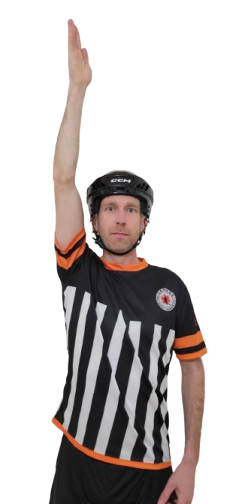
Rule 70. Leaving the Players’ or Penalty Bench
(a) No player may leave the players’ bench or penalty bench at any time during a fight on the floor, or for the purpose of starting a fight. Substitutions made prior to the fight shall be permitted, provided the players so substituting do not enter the fight.
(b) For a violation of Rule 70 (a), a double Minor penalty shall be imposed on the player of the team who was the first to leave the players’ or penalty bench during a fight. If players of both teams leave their respective benches at the same time, the first identifiable player of each team to do so, shall incur a double Minor penalty. A Game Misconduct penalty shall also be imposed on any player penalized under this section, plus any other penalties he may incur. Refer to Section (d).
(c) Any player (other than those dealt with under Section (b)) who leaves their players’ or penalty bench during a fight and is assessed a Minor, Major or Misconduct penalty for their actions, shall also incur an automatic Game Misconduct penalty, in addition to any other penalties he may incur. This includes a player leaving the penalty bench, for which he is to be assessed a Minor penalty in addition to the Game Misconduct penalty. Such player would not have to be the first player to leave a bench.
Note 1: A maximum of 5 players per team may be assessed Game Misconducts for violations of Sections (b) and (c) of this rule during a stoppage of play. The maximum of 5 players shall include any players penalized under Rule 59 – Fighting and Roughing.
Note 2: Where one team has been clearly identified as the first to leave the bench and the Referee has assessed the 5 player maximum Game Misconducts, then in this situation a sixth player on one team may be assessed a Game Misconduct penalty under this section. This sixth player must be the player who left the bench first.
Note 3: Referees must record in detail on the Official Game Report or separate Penalty Report Form, any bench clearing incidents.
(d) A penalized player may not leave the penalty bench (whether or not play is in progress), except at the end of the period or on the expiration of their penalty. A Minor Penalty shall be assessed any player that leaves the penalty bench or returns to the surface before the expiration of this penalty. However, in the case of a player returning to the surface prematurely due to an error by the Penalty Timekeeper, no penalty shall be assessed and the player must only serve the time remaining in their penalty at the moment he returned to the surface.
(e) When a player on a breakaway in the neutral or attacking zone is interfered with by a player of the opposing team who shall have illegally entered the game, or by a player or team official on the players’ or penalty bench, the Referee shall award a Penalty Shot to the non-offending team.
(f) Any team official who goes on the floor after the start of the game, without the permission of the Referee, shall be assessed, at the discretion of the Referee, a Bench Minor or a Game Misconduct penalty. If a Game Misconduct penalty is assessed, the team official shall be ordered to the dressing room for the remainder of the game and the Referee shall submit a report in full detail to the President, who may assess further penalties.
(g) If a penalized player returns to the floor from the penalty bench before their penalty has expired, (either by their own error or the error of the Penalty Timekeeper), any goal scored by their own team while he is illegally on the floor shall not be allowed. All penalties assessed either team shall be served as regular penalties.
(h) If a player shall illegally enter the game from their own players’ bench, any goal scored by their own team while he is illegally on the floor shall not be allowed. All penalties assessed either team shall be served as regular penalties.
SITUATION 1 Rule 70 (d)(e)
QUESTION: What would happen if a player who enters the game illegally from the penalty bench, by reason of the Timekeeper’s error, checks a player who has a breakaway in the neutral or attacking zone?
ANSWER: A Penalty Shot would be awarded. The Minor penalty for leaving the penalty bench before the expiry of a penalty would not be applied and the player would simply return to the penalty bench to serve the amount of time remaining in the penalty when they left the bench (even if a goal is scored on the Penalty Shot).
SITUATION 2 Rule 70 (d)(e)
QUESTION: What penalty would be assessed to a player who on their own, leaves the penalty bench before the expiry of their penalty, and checks a player who has a breakaway, in the neutral or attacking zone?
ANSWER: Award a Penalty Shot. The player leaving the penalty bench early would be assessed a Minor penalty to be served after their original time is up.
SITUATION 3
In the case of Situation 2, let us assume that the player scores on the breakaway. The remainder of the original Minor penalty would be washed out, but the Minor penalty for leaving the penalty bench early and the Minor, Major or Match penalty (originally calling for the Penalty Shot) would still be assessed.
SITUATION 4
In the case of Situation 2, let us assume that the penalized team is two players shorthanded. One player (#4) has 1:00 remaining in their Minor penalty and the other player (#13) has 1:30 remaining in their Minor penalty. Player #13 leaves the penalty bench early and checks an opposing player who is on a breakaway in the neutral or attacking zone.
RULING: (a) If they score – #4’s penalty would expire on the goal and #13 returns to the penalty bench to serve the remainder of their original Minor penalty, is assessed an additional Minor penalty for leaving the penalty bench early and a Minor or Major penalty for the infraction that would have originally called for a Penalty Shot.
(b) If they do not score – Award a Penalty Shot and #13 returns to the penalty bench to serve the remainder of their original Minor penalty and is assessed an additional Minor penalty for leaving the penalty bench early.
SITUATION 5 Rule 70 QUESTION: A player of Team “A” leaves the players’ bench during a fight. They are the first player to leave a bench. They get into a fight with an opposing player already involved in the fight. What penalties would be assessed?
ANSWER: The player who leaves the players’ bench would receive a double Minor for being the first player for leaving the bench, plus a Game Misconduct, as well a Major penalty and an additional Game Misconduct, under Rule 59 (a) – Fighting and Roughing. They would also be assessed a third Game Misconduct for taking part in another fight during the same stoppage of play, under Rule 59 (c). The player would also receive an additional Minor penalty for leaving the penalty bench before their time expired. The original two players who were fighting would both receive Majors and Game Misconducts for fighting. The player who becomes involved in the second fight would receive a second Major and Game Misconduct for the second fight. Finally, they would be assessed a third Game Misconduct for becoming involved in a second fight during the same stoppage of play, under Rule 59 (c) -Fighting and Roughing.
Note: When a situation arises that warrants the assessment of multiple Game Misconducts to a player, officials must ensure that each one is assessed and recorded on the Official Game Report, but have only one Game Misconduct per player announced on the P. A. system.
SITUATION 6 Rule 70 (d)
If a player serving a Misconduct comes on the floor before their penalty has expired, they would receive a Minor penalty. Put a player in the box to serve the minor penalty immediately and delay the Misconduct for 2 minutes. After the Minor is over, the balance of the Misconduct can be completed.
SITUATION 7 Rule 70 (a), (b), &(d)
Where the first player to leave a bench comes from the penalty bench, they shall be assessed 2 plus 2 plus 2, plus a Game Misconduct, plus any other penalties they may be assessed under the rules. They receives a double Minor and Game Misconduct for being the first player to leave the penalty bench, plus another Minor for leaving before their penalty expires. If the benches empty, Rule 59 (a)(5) would not apply, however the officials should make every attempt to get the players back to their respective benches.
SITUATION 8
An incident occurs on the floor where a player is assessed a Match penalty. During that stoppage of play, the benches clear during a fight on the floor. How many penalties will be served?
RULING: Rule 70 (c) – Note 1 stipulates that a maximum of 5 players per team may be assessed a Game Misconduct during one stoppage of play, for violations of
Rule 70 (b)(c). This would then apply. In addition, the Match penalty would be assessed and served in the normal manner, regardless of the number of Game Misconducts already assessed a team. The player receiving the Match penalty may or may not be one of the players assessed a Game Misconduct.
Note: In situations where players leave the bench during a fight on the floor, and the maximum of 5 players per team are assessed Game Misconducts for violations of Rule 70 (b)(c), it is still possible to assess Minor, Major, Misconduct, Game Misconduct (for an infraction to any rule other than Rule 70 (b)(c)), Gross Misconduct or Match penalties to players other than those included in the “maximum of 5 ejections” category.
SITUATION 9 Rule 70 (c) – Note 1
This Note stating that a maximum of 5 players per team may be assessed a Game Misconduct for violations of Sections (b) and (c) of this rule, may be applied more than once a game.
SITUATION 10 Rule 70 (c) Note 2
This Note states that six players on a team may be assessed a Game Misconduct when only one team is clearly identified as the first to leave the bench.
Note: When all 12 players on the floor (5 players on the floor plus the two goaltenders) are fighting, and only one team leaves the bench, or where a team is clearly identified as the first to leave the bench, then a sixth Game Misconduct (and the associated double Minor) would be assessed that team. The penalty would be to the player who was first to leave the bench.
SITUATION 11 Rule 70 (f)
Where a Manager or Coach is ordered to the dressing room, it is sufficient if they are away from the bench and not directing the team in any manner and in no way bothering the officials. This means they do not have to stay in the dressing room.
SITUATION 12 Rules 70 (d)(g)
If the Timekeeper or Penalty Timekeeper permits a player to return to the floor before their time has actually expired, this error must be corrected during the first stoppage of play following the actual time when the penalty should have expired. If the error was not discovered until after play resumed following this stoppage (and the actual penalty time had expired), then no adjustment shall be made if the error was discovered at a later period of time. The player will
not be required to serve the unexpired time. All goals scored by their team shall count. If the error is reported during this first stoppage of play, the player would be required to serve the unexpired time (amount of time remaining in the penalty when the player left the bench), and any goal scored by their team while they are illegally on the floor shall not be allowed.
EXAMPLE A:
A player of Team “A” received a Minor penalty at 8:30. At 7:00, due to a Timekeeper’s error, the player left the box. At 6:30, the penalty would have been up. Team “A” scored at 5:45 with the player on the floor. This is the first stoppage of play since the Timekeeper’s error and this error is immediately brought to the attention of the Referee.
RULING: The goal would be allowed, as the actual penalty time was up when the goal was scored, but the player would be required to return to the penalty box to serve their remaining 30 seconds.
EXAMPLE B:
A player of Team “A” received a Minor penalty at 8:30. At 7:00, due to a Timekeeper’s error, the player left the box. Team “A” scored at 6:40. At 6:30 the penalty would have been up. When Team “A” scored at 6:40, which was the first stoppage of play, the error was discovered.
RULING: Since the player of Team “A” was illegally on the floor, as there was still time remaining in their penalty, the goal would not be allowed and the player would be required to return to the penalty box to serve the 30 seconds that they had not served previously.
EXAMPLE C:
A player of Team “A” received a Minor penalty at 8:30. At 7:00, due to the Timekeeper’s error, the player left the box. At 6:40, Team “A” scored and at 6:30 the actual penalty time should have expired. At 5:50, the next stoppage of play, the Timekeeper’s error was discovered and reported to the Referee RULING: The goal shall not be allowed and the player shall be required to go back to the penalty box to serve the 30 seconds remaining in their penalty. The reason for this ruling is that the stoppage of play at 5:50 is actually the first stoppage of play following the actual time when the penalty should have expired. The goal at 6:40 was not actually the first stoppage of play.
SITUATION 13 Rule 70 (g)
If a player leaves the penalty bench before their penalty time has expired and that player is fouled in any manner, the appropriate penalty shall be assessed and the player would return to the penalty bench. The only exception would be that no Penalty Shot or Goal may be awarded in this situation, as a goal may not be scored by their team, while the penalized player is illegally on the floor.
SITUATION 14 Rule 70 (g)
Where a player has left the penalty box through their own error before their penalty has expired, any goal scored by their team shall be disallowed and the appropriate penalty assessed. This would hold true even if the goal was scored after the regular time for the penalty has expired and the player could have legally been on the floor. In essence, it is to be regarded as a delayed penalty.
SITUATION 15
QUESTION: Where a player returns to the floor from the penalty box through their own error, before their penalty has expired and the other team scores a goal while they are still illegally on the floor. Does the goal count and would it cancel the penalty?
ANSWER: 1. The goal would count.
2. The goal would cancel the unexpired penalty. The player would still have to go back to the penalty box to serve the penalty for leaving the penalty box too soon.
SITUATION 16 Rule 70 (a)
No player may leave the players’ bench for the purpose of starting a fight.
EXAMPLE:
On a stoppage of play, Team A8 comes off the players’ bench on a player change. Before play resumes they become involved in a fight with Team B6. QUESTION: What penalties are assessed if:
i. Team A8 initiates or instigates the fight and both players fight.
ii. A fight takes place with both players being willing participants.
iii. A fight takes place with Team B6 being the instigator.
RULING: As follows:
i. A8 double Minor plus Game Misconduct for leaving players’ bench for purpose of starting a fight, plus Minor for instigator, plus fighting Major + Game Misconduct. B6 receives a fighting Major plus Game Misconduct.
ii. A8 would not receive the instigator Minor. All other penalties would remain the same as in (i) above.
iii. A8 would only receive a fighting Major and Game Misconduct. B6 would receive a Minor for instigator, plus a fighting Major plus Game Misconduct.
SITUATION 17
With 1:20 remaining in the second period, two players, one from each team, are assessed Minor penalties (coincidental). They are sent to their respective dressing rooms without incident. With 3 seconds left in the game, a fight breaks out on the floor and one of the players that left with 1:20 remaining, comes back on the floor and gets involved in the fight(s).
QUESTION: What is the ruling?
ANSWER: This must be regarded as a special situation and therefore reported as such to the President. However, the player returning to the floor could still accumulate time penalties. There are a number of interesting possibilities:
1. In all cases where a penalized player returns to the floor from the dressing room (or after having been escorted off the floor to go to the dressing room) during a fight on the floor, that player shall be assessed a Gross Misconduct plus any other penalties they may incur.
2. If they were the first player to come on the floor they would be assessed a double Minor penalty plus a Game Misconduct for being the first player off the bench, plus a Gross Misconduct (as indicated in (1) above), plus any other penalties that they incur.
3. Should a non-penalized player return to the floor from the dressing room during a fight on the floor, they would be considered as a player coming off the players’ bench and penalized accordingly.




FOLLOW US!
LINKS
Events
Officials
News
CONTACT US
Send an Email
(647) 781-1818
Ontario Ball Hockey Federation © 2021